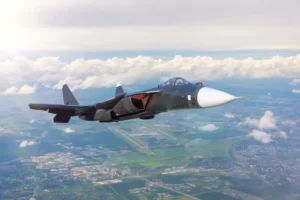
Modern aircraft are as much electronic systems as they are mechanical ones. The avionics suites fitted to today’s commercial airliners and business jets are extraordinarily complex — managing everything from navigation and communication to engine control, flight management, and structural health monitoring. Behind the safe operation of these systems in service are avionics engineers: specialists who combine electrical engineering knowledge with aviation regulation expertise to keep these systems performing as designed.
What Does an Avionics Engineer Do?
The avionics engineer’s primary responsibility is the maintenance, inspection, fault diagnosis, and repair of aircraft electrical and electronic systems. This includes:
- Communication systems – VHF and HF radios, ACARS datalinks, satellite communications
- Navigation systems – ILS, VOR, DME, GPS, ADS-B, inertial navigation systems
- Flight management systems (FMS) – Software-driven systems that integrate navigation, performance data, and flight planning
- Flight control systems – Including fly-by-wire flight control computers on modern aircraft
- Cockpit displays – EFIS (Electronic Flight Instrument System), MFDs, PFDs
- Warning systems – TAWS (Terrain Awareness and Warning System), TCAS, GPWS
- Aircraft electrical systems – Generators, bus systems, battery systems, load management
In line maintenance, avionics engineers are often the first point of contact for aircraft-on-ground (AOG) situations involving system faults. The ability to diagnose faults quickly and accurately — using aircraft built-in test equipment (BITE), wiring diagrams, and AMM procedures — is the core practical skill of the avionics engineer.
The Part-66 Category B2 Licence
The EASA Part-66 Category B2 licence is the primary certification for avionics certifying engineers. The B2 licence structure broadly mirrors the B1 (mechanical) structure, with a series of technical modules covering electrical fundamentals, digital techniques and electronic instrument systems, communications and navigation systems, and aircraft electrical power systems.
The examination route to a B2 licence is demanding — the depth of electronic theory required is significant — but the career rewards are commensurate. B2-licensed engineers are in consistent demand across the MRO, airline, and business aviation sectors, and the ongoing complexity growth in aircraft avionics means that demand is, if anything, increasing.
Many B2 engineers also hold or work towards a B1 endorsement or a combined B1/B2 licence structure, enhancing their versatility and market value.
The Evolution of Avionics: What Engineers Need to Know
Avionics technology has evolved rapidly over the past two decades, and the rate of change shows no sign of slowing. Key developments that avionics engineers need to stay current on include:
FANS and datalink – Future Air Navigation System (FANS) and ACARS datalink have transformed communication between aircraft and air traffic control, particularly over oceanic airspace. Engineers need to understand the architecture and maintenance requirements of these systems.
ADS-B mandate – The ADS-B Out mandate has been implemented across most major airspaces, requiring aircraft to broadcast position and identification data. A significant proportion of aircraft have undergone ADS-B installations and upgrades in recent years.
Integrated Modular Avionics (IMA) – Modern aircraft such as the Airbus A380 and A350 use IMA architectures in which multiple avionics functions share common computing platforms. This changes the fault diagnosis and maintenance methodology significantly compared to earlier federated architectures.
Cybersecurity – As aircraft systems become increasingly networked and connected to ground-based infrastructure, cybersecurity is becoming a consideration in avionics maintenance — a new frontier for the discipline.
Working in Avionics: The Day-to-Day Reality
Avionics engineering in a line maintenance environment involves a mix of scheduled maintenance tasks — software updates, functional tests, equipment replacements at life-limited intervals — and unscheduled fault-finding. The latter can be intellectually challenging and sometimes intensely pressured, particularly when an aircraft is AOG at a remote station and a quick resolution is needed to restore operations.
Base maintenance avionics work tends to be more planned and methodical, with scheduled inspections, equipment overhauls, and modification embodiments dominating the workload. Both environments offer rewarding and varied work.
Protec Technical places B2-licensed engineers and avionics technicians across a range of client organisations. If you’re an avionics professional exploring your next opportunity, register with Protec Technical today. Follow us on LinkedIn for the latest avionics roles and sector news.